Description
Ubiquiti NanoStation Loco M2 (LOCOM2) Overview
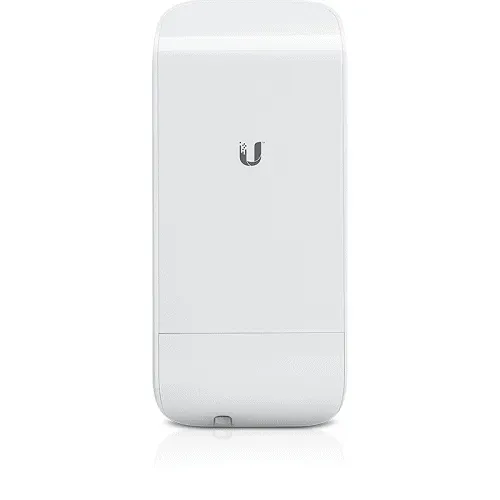
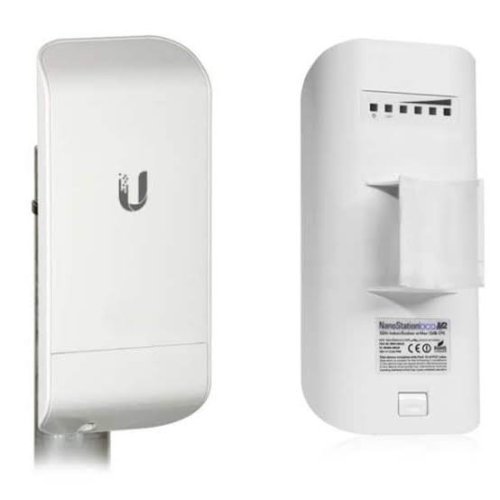
The Ubiquiti NanoStation Loco M2 (LOCOM2) is a compact and cost-effective 2.4GHz outdoor wireless CPE designed for broadband connectivity, wireless bridging and network extension. It combines 2×2 MIMO technology with an integrated 8.5dBi dual-polarized antenna for reliable outdoor wireless communication.
With up to 150+ Mbps outdoor throughput, the NanoStation Loco M2 is suitable for WISP networks, building-to-building links and remote connectivity. Its lightweight 180g enclosure and included pole-mounting kit make installation straightforward, while Passive PoE simplifies power and network connectivity.
Ubiquiti NanoStation Loco M2 (LOCOM2) Price in Kenya
| Product |
Approximate Price |
| Ubiquiti NanoStation Loco M2 (LOCOM2) |
KSh 7,000 – 10,000 |
Ubiquiti NanoStation Loco M2 (LOCOM2) Key Specs
| Specification |
Details |
| Brand |
Ubiquiti |
| Model |
LOCOM2 |
| Wireless Technology |
airMAX |
| Frequency Band |
2.4 GHz |
| Operating Frequency |
2412–2462 MHz |
| Antenna Gain |
8.5 dBi |
| MIMO |
2×2 |
| Polarization |
Dual Linear |
| Beamwidth |
60° H / 60° V / 60° Elevation |
| Cross-Polarization Isolation |
20 dB minimum |
| Maximum VSWR |
1.4:1 |
| Ethernet Interface |
1× 10/100 MbE RJ45 |
| Power Method |
Passive PoE |
| Power Supply |
24V 0.5A PoE Adapter |
| Maximum Power Consumption |
5.5W |
| Dimensions |
161 × 31 × 80 mm |
| Weight |
180 g |
| Mounting |
Pole Mount |
| Operating Temperature |
-30°C to 75°C |
| Operating Humidity |
5–95% non-condensing |
| Enclosure |
Outdoor UV-stabilized plastic |
Ubiquiti NanoStation Loco M2 (LOCOM2) Performance
- Up to 150+ Mbps outdoor throughput.
- 2×2 MIMO improves wireless transmission efficiency.
- 8.5dBi antenna gain provides focused outdoor wireless coverage.
- 2.4GHz operation offers good propagation for outdoor deployments.
- airMAX technology improves wireless network efficiency.
- Dual-linear polarization supports MIMO wireless operation.
- Suitable for wireless broadband distribution and bridging.
- Designed for reliable outdoor connectivity over appropriate distances.
Ubiquiti NanoStation Loco M2 (LOCOM2) Smart Features
- airMAX technology helps optimize wireless communication.
- airMAX TDMA improves efficiency in supported network deployments.
- airOS provides configuration and monitoring tools.
- Signal-strength LEDs assist with antenna alignment.
- Supports wireless performance monitoring.
- Adjustable wireless settings allow network optimization.
- Passive PoE simplifies installation.
- Supports Point-to-Point and Point-to-Multipoint configurations.
Ubiquiti NanoStation Loco M2 (LOCOM2) Design & Build
- Compact 161 × 31 × 80 mm form factor.
- Lightweight 180g construction makes mounting easy.
- Outdoor UV-stabilized plastic enclosure.
- Pole-mounting kit included.
- Low 5.5W maximum power consumption.
- Designed for temperatures from -30°C to 75°C.
- Suitable for rooftops, poles and outdoor structures.
- Compact construction makes it practical for space-constrained installations.
Ubiquiti NanoStation Loco M2 (LOCOM2) Connectivity
- 2.4GHz wireless connectivity.
- 1× 10/100 MbE Ethernet port.
- Passive PoE power connection.
- 24V 0.5A PoE adapter included.
- Supports airMAX wireless networking.
- Suitable for Point-to-Point wireless links.
- Supports Point-to-Multipoint deployments.
- Compatible with Ubiquiti airMAX M-series networks.
Ubiquiti NanoStation Loco M2 (LOCOM2) Use Cases
- WISP Networks: Deploy as customer-premises equipment for wireless Internet services.
- Wireless Broadband: Provide outdoor wireless Internet connectivity.
- Building-to-Building Links: Connect nearby buildings without long cable runs.
- Network Extension: Extend connectivity to areas where wired infrastructure is difficult to install.
- Wireless Bridging: Create directional wireless connections between network locations.
- Remote Connectivity: Connect remote offices, homes and facilities.
- Outdoor Networking: Provide wireless connectivity across compounds, farms and other properties.
Ubiquiti NanoStation Loco M2 (LOCOM2) Pros & Cons
| Pros |
Cons |
| Compact and lightweight |
10/100 Ethernet limits wired throughput |
| 2×2 MIMO technology |
2.4GHz can experience interference |
| 8.5dBi integrated antenna |
Older airMAX M-series technology |
| 150+ Mbps outdoor throughput |
Requires appropriate wireless alignment |
| Low 5.5W power consumption |
Passive PoE required |
| UV-stabilized outdoor enclosure |
Not compatible with modern Wi-Fi 6 standards |
| Pole mounting included |
— |
| Affordable outdoor CPE |
— |
Ubiquiti NanoStation Loco M2 (LOCOM2) FAQs
What is Ubiquiti NanoStation Loco M2 (LOCOM2)?
Ubiquiti NanoStation Loco M2 (LOCOM2) is a compact 2.4GHz airMAX outdoor CPE featuring 2×2 MIMO and an integrated 8.5dBi antenna.
What frequency does Ubiquiti NanoStation Loco M2 use?
The NanoStation Loco M2 operates in the 2.4GHz band, with an operating frequency range of 2412–2462 MHz.
What is the antenna gain of NanoStation Loco M2?
The Ubiquiti NanoStation Loco M2 has an integrated 8.5dBi dual-linear polarized antenna.
What throughput does NanoStation Loco M2 support?
The NanoStation Loco M2 is capable of up to 150+ Mbps outdoor throughput under suitable conditions.
How many Ethernet ports does NanoStation Loco M2 have?
It has one 10/100 MbE RJ45 Ethernet port.
Does Ubiquiti NanoStation Loco M2 support PoE?
Yes. It uses Passive PoE and includes a 24V 0.5A PoE adapter.
Is NanoStation Loco M2 suitable for outdoor use?
Yes. It has an outdoor UV-stabilized plastic enclosure and operates from -30°C to 75°C.
Can NanoStation Loco M2 be used for Point-to-Point connections?
Yes. It can be used for wireless Point-to-Point bridging as well as other airMAX networking applications.
Ubiquiti NanoStation Loco M2 (LOCOM2) Conclusion
The Ubiquiti NanoStation Loco M2 (LOCOM2) is a compact and affordable 2.4GHz outdoor wireless CPE for broadband distribution, wireless bridging and network extension. Its 2×2 MIMO technology, 8.5dBi integrated antenna, 150+ Mbps outdoor throughput, Passive PoE and lightweight construction make it a practical choice for WISP networks, building-to-building links and remote connectivity in Kenya.